


Germany's 2027 holiday calendar brings nine nationwide public holidays, with several more depending on where you live. Because each of the 16 federal states sets most of its own holidays, a worker in Munich can enjoy up to four more days off than a colleague in Hamburg. 2027 also has a catch: an unusually large number of holidays land on weekends, so planning your leave around the remaining weekday holidays matters more than usual. Here is everything you need to know.
Public holidays (gesetzliche Feiertage) are largely a matter for the federal states. Only German Unity Day on 3 October is fixed by federal law; the rest are set by state legislation. Nine holidays are observed everywhere, and Bavaria tops the table with up to 13. Importantly, Germany does not move holidays that fall on a Saturday or Sunday to a weekday, so a weekend holiday is simply lost as a day off.
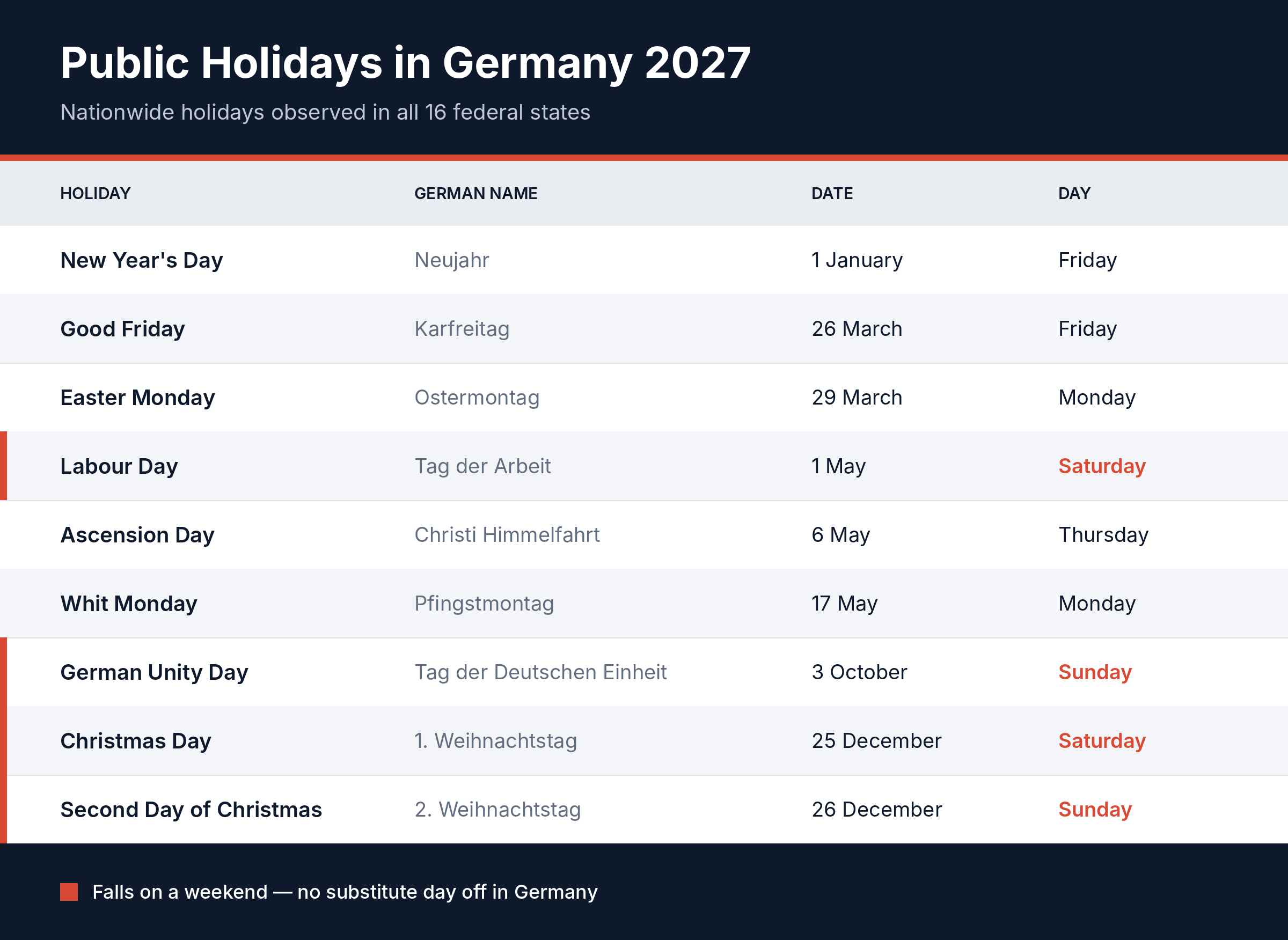
2027 is not kind to workers. Labour Day, German Unity Day and both Christmas holidays all fall on weekends, as do Assumption Day and Reformation Day in the states that observe them. With no substitute days in German law, many employees will have noticeably fewer days off than in 2026.
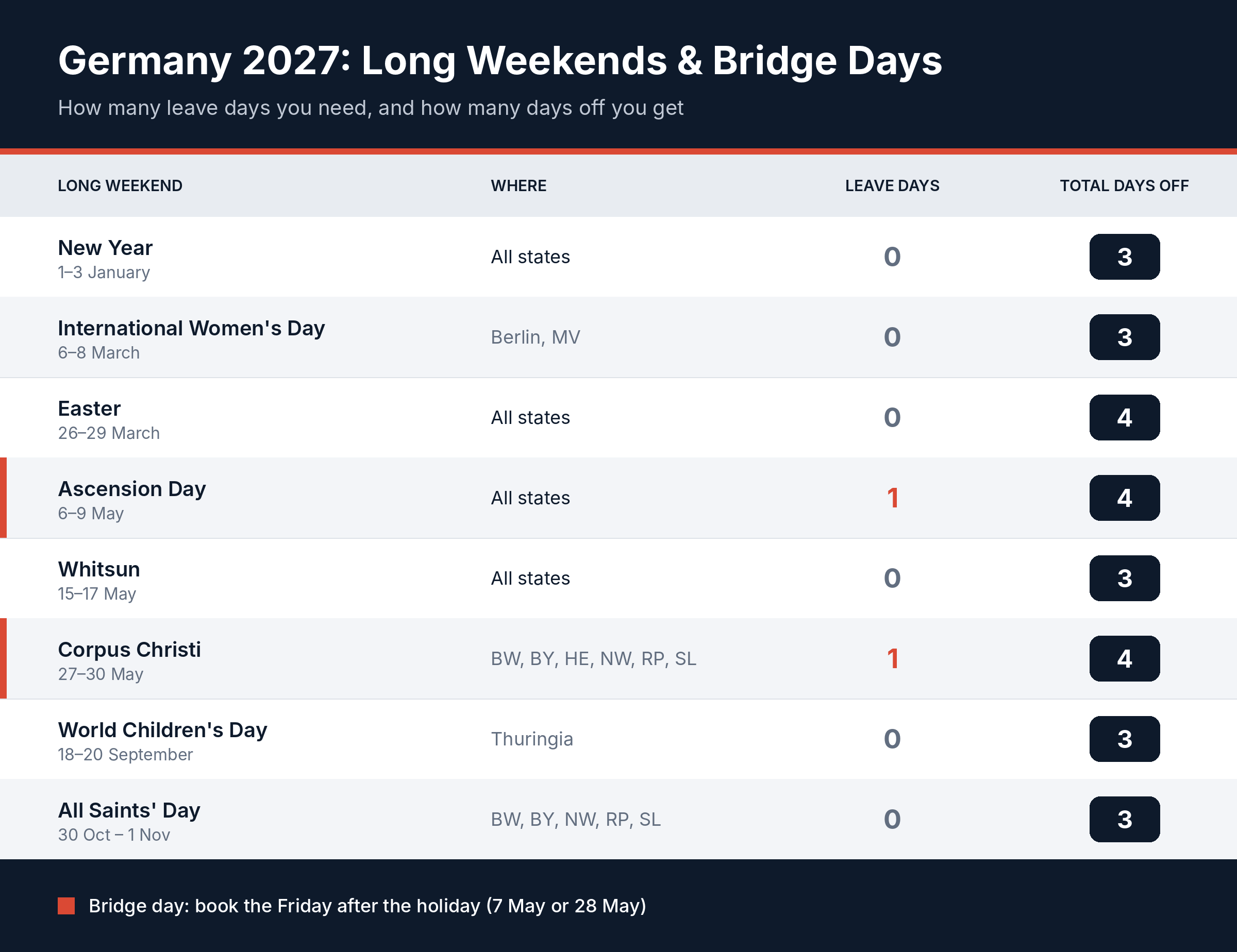
Book these 10 working days as leave:
In total that is 4 + 6 = 10 leave days for 10 + 12 = 22 days off. Both plans work in every state, because Good Friday, Easter Monday, Ascension Day and Whit Monday are nationwide holidays.
If you work in Germany, check your own state's list before booking holidays, and request bridge days early, especially around Ascension and Corpus Christi, when demand for leave is highest. A little planning in early 2027 can turn a weekend-heavy calendar into some well-earned long breaks.
From breaking news to thought-provoking opinion pieces, our newsletter keeps you informed & engaged.
By subscribing, you agree to our Terms & Conditions and Privacy Policy.


