


Germany's federal cabinet used its Wednesday session to push forward four separate pieces of legislation, touching on retirement savings for children, student financial aid, youth protection and the powers of the country's intelligence services. Each of the drafts now moves on to the Bundestag, where lawmakers will decide whether the proposals survive in their current form.
The centrepiece of the day was the so-called Frühstartrente, or early-start pension. Under the approved draft, the state will pay ten euros per month into an individual, capital-funded retirement savings account for every child, beginning on the child's sixth birthday and continuing until the eighteenth.
Federal Finance Minister Lars Klingbeil of the SPD presented the measure as an instrument that serves two purposes at once. He described it as a meaningful contribution to better old-age provision and to greater equality of opportunity, adding that every child would receive starting capital for their own private retirement savings.
The scheme is designed to begin with children born in 2020, applied retroactively to 1 January 2026. From 2027 onwards, each new cohort turning six will be added automatically, meaning the programme expands by one age group per year without further legislative action.
Klingbeil argued that the arrangement allows young people to accumulate assets of their own across more than a decade while learning at an early age how capital-market provision actually works. He stressed that, unlike existing routes into private savings, this form of wealth accumulation would not depend on the household a child grows up in.
Not every savings product will qualify. Support is limited to certified contracts that carry an effective cap on charges and that impose no acquisition or distribution costs until the account holder reaches the age of majority. Families who never open a depot are not excluded. If parents fail to set up an account, the children themselves retain the ability to claim the accumulated state subsidies at a later point.
Returns generated inside the account remain tax-free until the payout phase begins. As a rule, subsidised capital cannot be withdrawn before the holder has completed their sixty-fifth year. Beyond the state's contribution, private money may be added. Parents, grandparents or others may top up the account with up to 6,840 euros per year from their own funds. No additional tax relief is attached to these voluntary payments, however, meaning the incentive lies in the account structure itself rather than in any deduction.
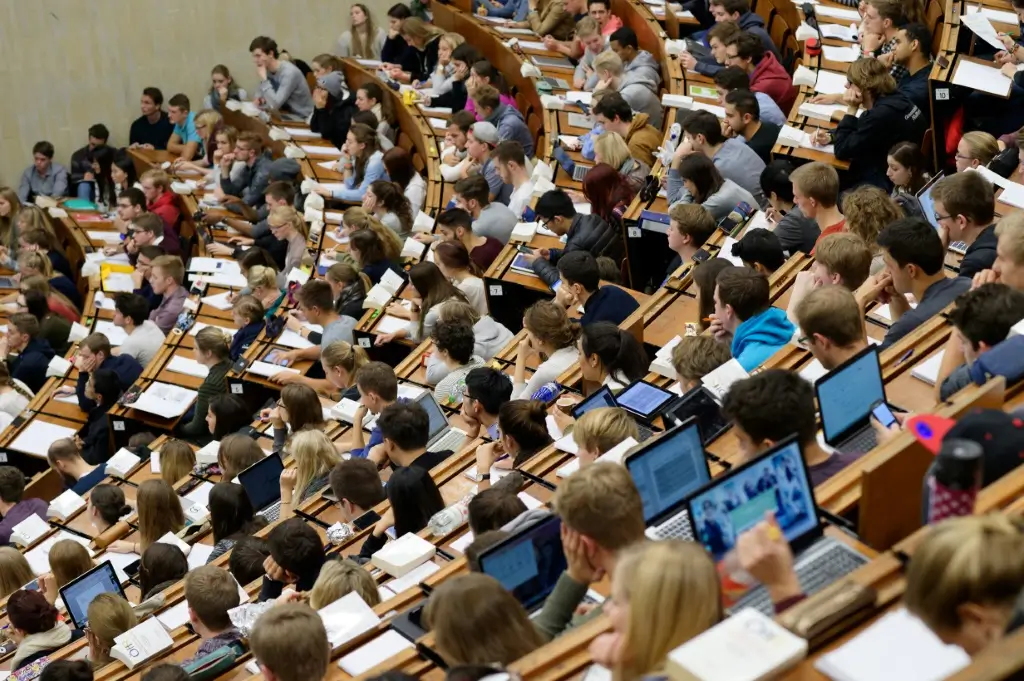
The cabinet also adopted a reform of Bafög, the federal training assistance programme for pupils and students. Rates will go up, but the increases arrive later than the government had originally intended. The housing allowance is set to climb from 380 to 440 euros per month. That change takes effect in the 2027 summer semester rather than the 2026/2027 winter semester as previously planned.
The basic requirement rate for students rises in two stages: to 503 euros for the 2027/28 winter semester, and to 563 euros by the 2029 summer semester. Rates for pupils are to be raised proportionally. Under the earlier schedule, the second increase to the basic rate would have arrived in the 2028/29 winter semester.
Reaching agreement took time. The CDU, CSU and SPD spent an extended period negotiating the size of the increases against the backdrop of budgetary pressure to economise. The three coalition partners eventually settled on a package that combines higher rates with a later entry into force.
Federal Research Minister Dorothee Bär of the CSU framed the cabinet decision as a decisive step towards enabling Bafög to deliver on its promise of social advancement. She described the programme as the central statutory instrument for financing both academic and school-based training.
From the start of the 2028/29 school year and winter semester, allowances and the income thresholds derived from them will be raised automatically by 1.5 percent each year. The mechanism matters because a student's own income and assets, along with the income of parents and life partners, are counted against Bafög entitlements once allowances have been deducted.
Two procedural changes accompany the financial ones. Applications are to be filed exclusively in digital form, and the proof-of-performance requirement is to be dropped altogether. At present, students must submit that documentation after their fourth semester in order to continue receiving support. The reform now passes to the Bundestag for deliberation.
Bafög exists to support the education of young people whose families cannot provide sufficient assistance, with rates varying according to the type of training and the applicant's living situation.

A third draft law approved by the cabinet targets what is known in Germany as accompanied drinking. The government intends to abolish the rule that currently allows 14- and 15-year-olds to buy and consume beer, wine and sparkling wine in public when accompanied by a parent.
The reasoning is set out in the draft itself, which states that the exception weakens the protection of young people against the considerable health and social consequences of alcohol consumption. The text further argues that the rule contradicts the government's own objectives on improved addiction prevention.
The amendment to the Youth Protection Act is embedded in a broader legislative package through which Federal Family Minister Karin Prien of the CDU aims to reform child and youth welfare services. That package will likewise be taken up next by the Bundestag.
The fourth decision concerns a comprehensive reform of Germany's intelligence apparatus, presented against the background of a heightened threat picture. The legislative package tabled by Interior Minister Alexander Dobrindt of the CSU grants the Federal Intelligence Service and the Federal Office for the Protection of the Constitution considerably expanded scope to collect and store data, and additionally allows them to actively combat threats such as sabotage and hacking attacks.
Until now, German services have largely confined themselves to gathering information. The reform equips them with operational authority comparable to that of foreign agencies, including the ability to disable IT installations during an ongoing cyberattack. In situations of tension or defence, or under particular threat conditions, the foreign service may also carry out sabotage abroad.
Both agencies would generally be permitted to conduct hacking operations in order to manipulate or delete data, which could serve to alter instructions for weapons construction or block payments to low-level agents recruited on short notice for acts of sabotage. Departing from the original draft, the Federal Office for Information Security will not be obliged to report vulnerabilities it discovers to the foreign service for offensive use.
The package, running to more than 700 pages, has drawn substantial criticism. The Greens and the Left party contend that the plans breach the separation principle that divides intelligence powers from police powers, while human rights advocates warn of mass surveillance. Dobrindt and Chancellery Minister Nina Warken of the CDU, who is responsible for the intelligence services, scheduled a midday press appearance at the Chancellery to explain the reform in detail.
From breaking news to thought-provoking opinion pieces, our newsletter keeps you informed & engaged.
By subscribing, you agree to our Terms & Conditions and Privacy Policy.


