


Germany's Federal Network Agency (Bundesnetzagentur) has moved to open up the country's long-distance rail market to greater competition, siding with Italian operator Italo in a dispute against Deutsche Bahn (DB) over access to the country's busiest rail corridors. The Bonn-based regulator's draft decision marks a significant shift in a market that Deutsche Bahn has dominated for decades, controlling more than 90 percent of long-distance rail transport in Germany.
At the heart of the regulator's proposal is a so-called competition clause that would apply specifically to heavily trafficked rail corridors. Under the plan, DB Infrago, the Deutsche Bahn subsidiary responsible for managing rail infrastructure, would no longer be permitted to allocate more than 60 to 75 percent of train slots on these routes to a single company.
The measure is designed to guarantee rival operators a minimum level of access without diverting capacity away from regional or freight services. Notably, the clause would only come into effect in the event of a dispute between operators.
Klaus Mueller, president of the Bundesnetzagentur, explained that competitors such as Italo and the German long-distance bus and rail operator Flix have had to commit substantial sums toward acquiring new trains, yet have previously had no reliable way of knowing whether they would secure enough usage rights on the network to justify that investment.
According to Mueller, the new clause is intended to give these companies the certainty they need while still ensuring "a minimum level of access in long-distance transport" for Deutsche Bahn's competitors.
Italo, backed by its parent company, is preparing to invest 3.6 billion euros (around 4.1 billion dollars) to enter the German market starting in 2028. Italo intends to launch long-distance services on two of Germany's most profitable and heavily used routes: from Munich via Cologne to Dortmund, and from Munich to Berlin.
On the North Rhine-Westphalia route, Italo plans hourly departures, while the Berlin connection would run every two hours. In total, the operator aims to run 56 daily services once it enters the market. The regulator's decision followed a formal complaint lodged by Italo, which had sought to compel DB Infrago to offer it long-term framework contracts for track access.
While the Bundesnetzagentur stopped short of mandating such framework agreements, it opted instead for the broader competition clause as a way to foster market access. In addition to track capacity, DB Infrago would also be required to make station space available to competitors such as Italo for ticket sales and passenger lounges.
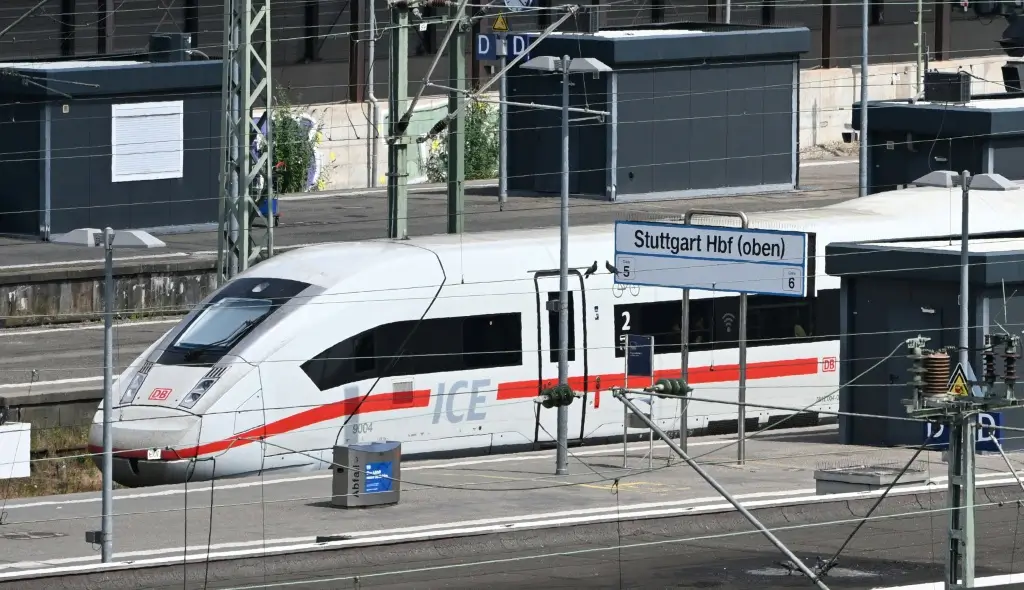
Deutsche Bahn welcomed the regulator's decision not to force it into framework contracts with Italo, but warned that the competition clause could worsen existing structural problems around rail junctions and capacity. The company also questioned why lounge space should be regulated in favor of competitors when other station offerings, such as catering, newsstands, or bookshops, are not subject to similar rules.
The railway union EVG voiced sharper criticism. Union chief Martin Burkert argued that allowing competition only on the most lucrative main lines amounts to "cherry-picking," warning that less-demanded destinations such as Schwerin, Jena, or Augsburg could eventually be cut off from the long-distance network. Burkert also criticized Federal Transport Minister Patrick Schnieder, arguing that such a far-reaching decision for Germany's long-distance rail market should not be left to a single regulatory authority alone.
The decision arrives at a difficult moment for Deutsche Bahn, whose network has long been plagued by delays, cancellations, and ageing infrastructure. Those troubles were underscored recently when a radio communications system failure crippled train operations nationwide for several hours, leaving thousands of passengers stranded. Deutsche Bahn has since launched a modernisation drive and is counting on a substantial increase in public infrastructure spending to help turn around its performance.
From breaking news to thought-provoking opinion pieces, our newsletter keeps you informed & engaged.
By subscribing, you agree to our Terms & Conditions and Privacy Policy.


