


Germany has recorded its highest caesarean section rate since reunification, with one in three hospital births now delivered surgically. The Federal Statistical Office in Wiesbaden announced that 215,900 of the 654,600 women who gave birth in hospitals during 2024 underwent caesarean sections, accounting for 33 percent of all clinic deliveries.
This milestone represents a dramatic shift in birthing practices over the past three decades. Since 1991, when only 15.3 percent of hospital births were caesarean sections, the rate has more than doubled. The announcement came ahead of International Midwives Day on May 5.
The data reveals substantial differences between federal states. Hamburg recorded the highest caesarean section rate at 36.4 percent, followed by Saarland at 35.9 percent and Hesse at 35.6 percent. Meanwhile, Saxony recorded the lowest rate at 27.4 percent, with Brandenburg at 27.6 percent and Berlin at 29.9 percent.
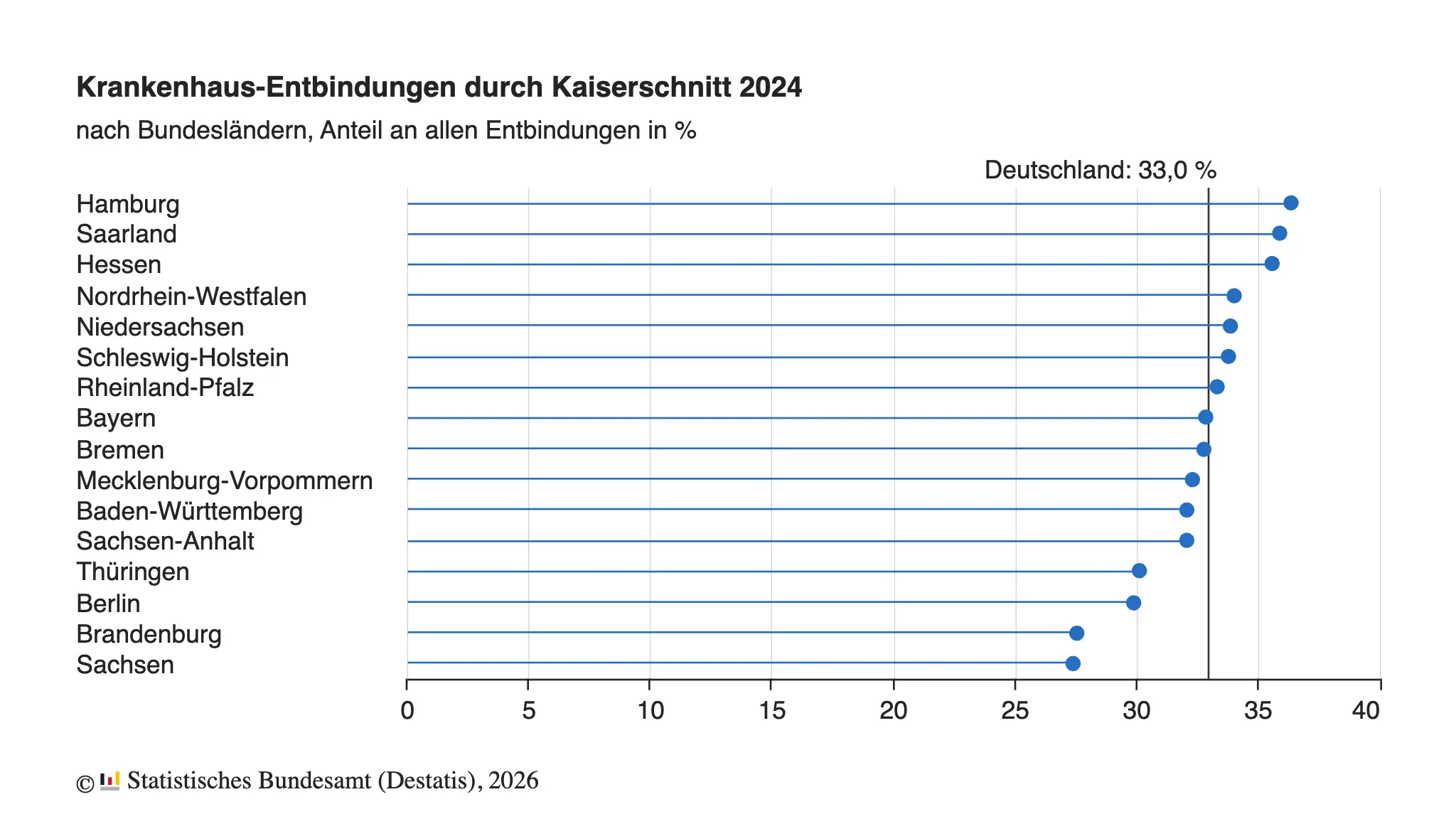
While caesarean rates continue climbing, natural childbirth remains the most common delivery method in German hospitals. Approximately 60.1 percent of women gave birth without surgical intervention in 2024. Alternative assisted delivery methods are rarely employed, with vacuum extraction used in 6.7 percent of cases and forceps in merely 0.2 percent.
Hospital staffing showed modest growth, with approximately 12,900 midwives and nurses providing care during 2024, marking a 3.3 percent increase of roughly 400 professionals from the previous year.
From breaking news to thought-provoking opinion pieces, our newsletter keeps you informed & engaged.


