


Around 390,000 people in Germany received regular benefits under the Asylum Seekers’ Benefits Act (Asylbewerberleistungsgesetz, AsylbLG) at the end of 2025, according to figures from the Federal Statistical Office (Destatis). This marked a decline of around 71,400 recipients, or 15%, compared with the end of 2024. Among those receiving regular asylum seeker benefits, Syrian nationals formed the largest group. Around 64,600 recipients, equivalent to 17% of the total, came from Syria.
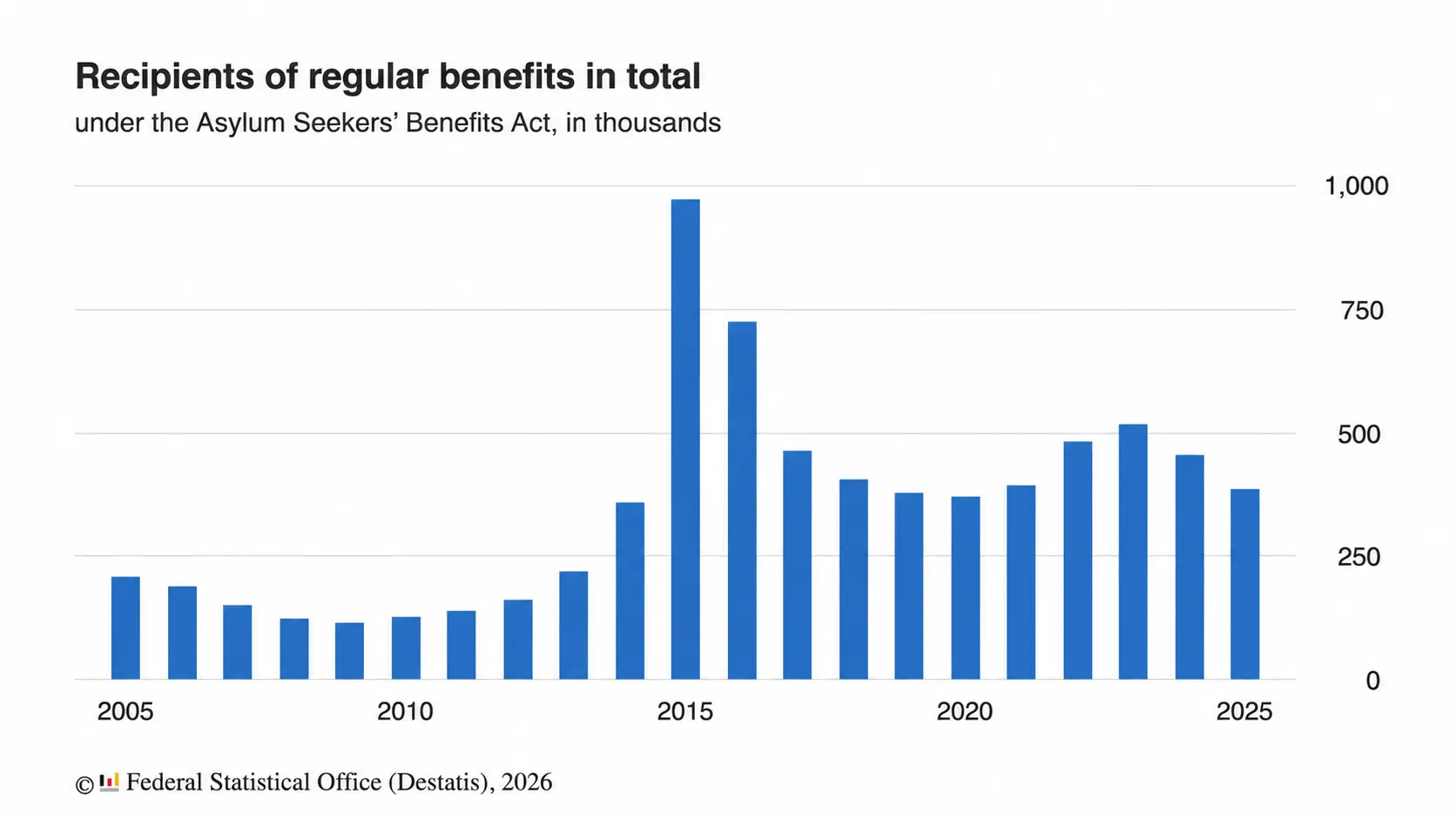
Asylum seeker benefits are available to foreign nationals living in Germany who meet one of the eligibility requirements set out under Section 1 of the Asylum Seekers’ Benefits Act. The system distinguishes between regular benefits and additional benefits provided for specific circumstances.
Regular benefits cover basic needs, including food, accommodation and clothing. They can also include benefits under Section 2 of the AsylbLG for people who have lived in Germany for at least 36 months without significant interruption and whose length of stay has not been deliberately prolonged through abuse, such as destroying a passport or providing a false identity.
Men accounted for 61% of regular benefit recipients at the end of 2025, while women represented 39%. Minors made up 31% of recipients. People aged between 18 and 49 represented the largest age group, accounting for 62% of all recipients. Another 7% were aged 50 or older. The figures therefore show that most regular benefit recipients were adults below the age of 50, while almost one-third were under 18.
Asian countries accounted for 48% of people receiving regular asylum seeker benefits, making Asia the largest region of origin. European countries accounted for 30%, while 17% came from Africa. After Syria, the most frequently represented countries of origin were Türkiye, Afghanistan and Iraq. Turkish nationals accounted for 15% of recipients, followed by Afghans at 10% and Iraqis at 7%. People from Ukraine represented 5% of all those receiving regular benefits.
In addition to regular benefits, around 214,800 people received special benefits under the Asylum Seekers’ Benefits Act at the end of 2025. This was also 15% lower than the figure recorded a year earlier.
Special benefits can be provided regardless of how long a person has been in Germany when particular needs arise. They include support related to illness, pregnancy and childbirth, as well as other forms of assistance covered by the law. Around 10,000 people received only special benefits and did not receive regular asylum seeker benefits.
Ukrainian refugees with a residence permit under Section 24 of Germany’s Residence Act, or with a corresponding temporary certificate, moved from the asylum benefits system to Germany’s social security system by 31 August 2022 at the latest. Since then, newly arriving people from Ukraine can receive benefits under the AsylbLG only until the required residence permit is issued and it is determined whether they fall under SGB II or SGB XII.
From breaking news to thought-provoking opinion pieces, our newsletter keeps you informed & engaged.
By subscribing, you agree to our Terms & Conditions and Privacy Policy.


